
Source Removal, Not Masking
Odor Control & Removal in Ann Arbor, MI
Persistent smells have physical sources — smoke residue, soaked carpet pad, damp material feeding mildew. Our Ann Arbor crew finds the source, removes it, and treats what absorbed it. That's why it stays gone.
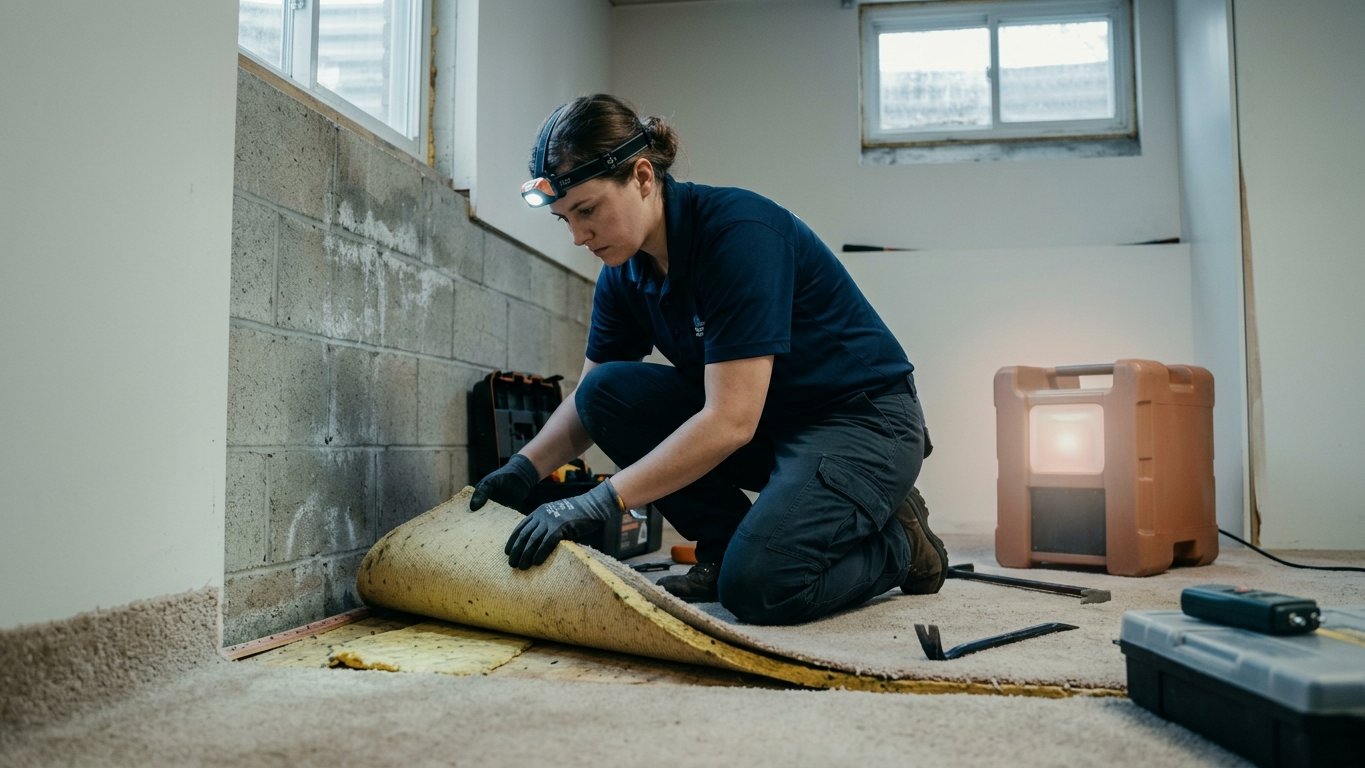
Odor control and removal in Ann Arbor
The direct answer: professional odor removal means finding the physical source of a smell, removing or cleaning it, and then treating the porous materials that absorbed it. Air fresheners, candles, and "odor bomb" foggers only mask — which is why the smell returns on the next humid day. If an odor has survived your cleaning attempts, the source is still in the building.
Most odor jobs we run in Ann Arbor trace back to one of four sources: smoke residue after a fire or furnace puff-back, pet accidents that reached the carpet pad, sewage events, and — the local classic — damp basements feeding mildew. Older homes near downtown with fieldstone foundations hold humidity beautifully, which is why "musty basement smell" is practically an Ann Arbor season. In every one of those cases the odor is a symptom; the source is the job.
That's also why odor work fits naturally alongside our water damage restoration work across Ann Arbor: the hardest household odors are almost always moisture stories — and solving the moisture is half the treatment.
What we treat
- Smoke odor after a fire or heavy cooking event
- Musty basement smell that never quite leaves
- Pet urine odor in carpet and pad
- Sewage smell after a backup
- Odor left behind after water damage drying
- That smell you can't find the source of
A safety note worth repeating
Two smells skip the odor-control conversation entirely: anything like rotten eggs or gas means leave the house and call your gas utility first, and a strong sewage smell paired with slow drains can signal an active backup — treat that as an emergency call, not a deodorizing project. When in doubt, call and describe it; we'll tell you honestly whether it's our kind of problem.
Why the honest answer beats the strong chemical
People ask us for "the strongest odor eliminator." The strongest odor eliminator is removal. Equipment and treatments have their place — and we use them — but only after the source is out. Anything else is paying to postpone the same smell. It's the same philosophy as our drying work: fix the cause, verify the result, and the problem doesn't come back.
How odor removal works
Four steps: find it, remove it, treat it, verify it
-
Trace the source
Every persistent smell has a physical source. We find it — soot film, pet-soaked pad, a dried drain trap, damp material feeding mildew.
-
Remove, don't mask
The source material gets cleaned or removed: extracted pad, cleaned residue, corrected moisture. Sprays over a live source are rented relief.
-
Treat what absorbed it
Porous surfaces that held the odor get treated — cleaned, sealed, or deodorized with equipment matched to the odor type.
-
Verify it stays gone
The test is a humid day, not the hour after treatment. We confirm the odor doesn't return when conditions bring it back hardest.
Real questions, straight answers
Odor questions we hear most
How do you permanently remove odors from a house?
Find and remove the source — that's the whole game. Sprays and plug-ins mask; permanent removal means extracting or cleaning what actually holds the smell (soot residue, pet-soaked pad, sewage-touched material, mold growth), then treating the surfaces that absorbed it. If a smell keeps coming back, the source is still there. That's what we trace first.
What's the hardest smell to get rid of in a house?
Smoke and pet urine compete for the title. Both penetrate porous materials — carpet pad, drywall, ductwork — and re-release with humidity, which is why surface cleaning alone fails. Both are beatable, but treatment has to reach where the odor lives: the material gets cleaned, sealed, or removed, not just the air freshened.
What should I do about a musty smell in my basement?
Treat it as a moisture alarm, not a smell problem. Musty means microbial activity somewhere damp — seepage, a slow leak, or humidity feeding mold growth. Air fresheners won't fix the source, and a dehumidifier alone only slows it down. Get the moisture found and fixed; the smell leaves with it.
Who do I call for a strange smell in my house?
Depends on the smell. Rotten eggs or gas: leave the house and call your gas utility first — that's a safety issue, not a cleaning issue. Sewage: a restoration company, since it often signals a backup or a dried-out drain trap. Musty, smoky, or animal odors: that's odor-control work — we trace the source and treat it.
A smell that keeps coming back?
That's a source, not a ventilation problem. Call — finding it is the part we're good at.