Dry to the Numbers
Applied Structural Drying in Ann Arbor, MI
Drying a building is a measured process, not a guess with fans. We map the moisture, set commercial drying equipment, and log readings daily until your Ann Arbor home hits documented dry standard.
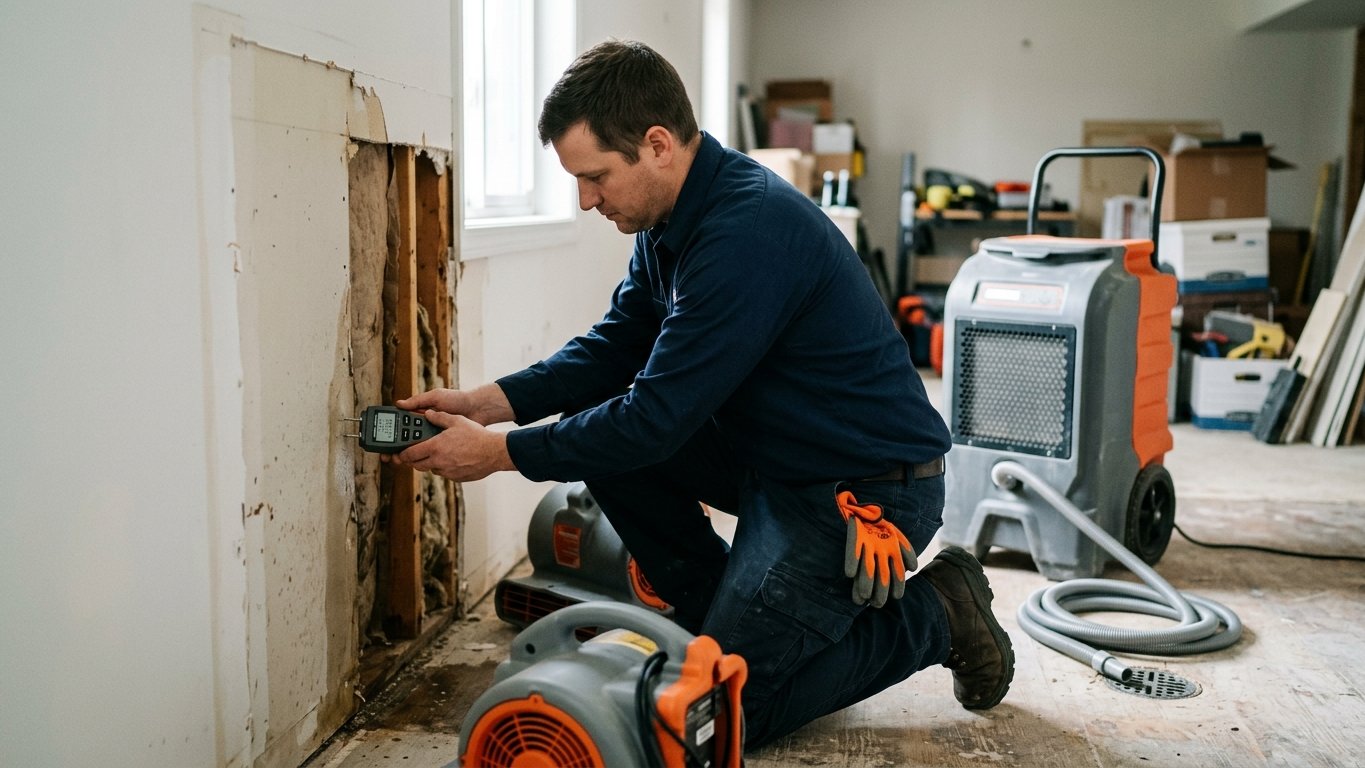
Applied structural drying in Ann Arbor, measured not guessed
The direct answer: applied structural drying is the controlled drying of a building's structure — framing, subfloors, drywall, hardwood — using directed airflow, commercial dehumidification, and daily moisture readings until materials return to dry standard. It's the discipline the IICRC trains as its own specialty, and it's the difference between a house that's dry and a house that looks dry.
As an IICRC Certified Firm (#70230473), this is the science half of our water damage restoration work in Ann Arbor — every extraction we do ends in a structured dry-down. But drying also stands on its own: sometimes another contractor pulled the water out, a plumber fixed the pipe, or you handled a small loss yourself, and what you need now is someone to dry the structure properly and prove it.
Proof matters more than people expect. Ann Arbor's housing stock — plaster-and-lath older homes near downtown, finished basements in the newer subdivisions — hides moisture well. Wood framing that stays wet warps and rots; damp drywall grows mold inside the wall where you won't see it until it smells. A drying log with daily readings is what tells you, and your insurance adjuster, that neither is coming.
When to call for structural drying
- After any water loss — burst pipe, flood, backup
- Wet drywall you'd rather dry than demolish
- Hardwood floors starting to cup
- Wall cavities and insulation that took water
- Subfloors under lifted vinyl or LVP
- Second opinions on a 'that looks dry to me'
Why fans alone fail
A household fan moves room air across a surface; it does almost nothing for the water inside a wall cavity or under a subfloor. Worse, evaporating surface water without dehumidification just moves the moisture into the air — where it condenses on the next cool surface. Real drying balances evaporation against dehumidification and checks the result with meters. That's also why we say to skip the "leave the windows open" advice in a Michigan spring: outside air here often carries more moisture in than out.
What it costs to skip
Under-dried structure is the root of most of the mold remediation work we see months after a "finished" water loss. If you're weighing professional drying against waiting it out, read our guide to what water damage restoration costs and why — the drying phase is consistently the cheapest insurance in the whole process.
The drying discipline
How metered drying works
-
Map the moisture
Meters and a thermal camera find everywhere the water actually went — wall cavities, subfloor, framing — not just where it shows.
-
Set the drying system
Air movers and commercial dehumidifiers are placed and balanced for the space: airflow across wet surfaces, dehumidification sized to the load.
-
Read the numbers daily
Every material gets logged readings each day. Equipment moves as rooms dry — the meters run the schedule, not habit.
-
Verify dry standard
The job ends when wet materials match dry reference readings for the same building. You get the final moisture log — so does your insurer.
Real questions, straight answers
Structural drying questions we hear most
What is applied structural drying?
The controlled, measured drying of a building — air movers, commercial dehumidifiers, and daily moisture readings that bring framing, subfloors, and drywall back to dry standard instead of guessing. The IICRC trains it as its own discipline (ASD) for a reason: drying too little grows mold, and drying blind tears out material that could have been saved.
How long does it take for water to cause structural damage?
Damage starts within hours — drywall wicks water upward, particle board swells, and finishes delaminate the first day. Mold can join within 24–48 hours. Structural framing tolerates more, but every day wet lumber sits, the odds of warping and rot climb. That's the honest reason restoration runs 24/7: the clock decides what's salvageable.
How do you know if moisture is behind drywall?
Meters, not eyes. A moisture meter reads through the surface, and a thermal camera flags cool evaporation patterns worth probing. Signs you can spot yourself: bubbling paint, swelling baseboard, a musty smell, or a wall that feels cool days after a leak. If a wall took water and nobody metered it, assume it's still wet until proven dry.
Can't I just run fans and a dehumidifier myself?
Household fans dry surfaces; they rarely dry structure. Water that reached carpet pad, subfloor, or wall cavities needs directed airflow, commercial dehumidification, and readings to confirm it actually left. The failure mode of DIY drying isn't effort — it's declaring victory early and finding mold or warping weeks later.
What does 'dry standard' mean?
It means wet materials have been brought back to the moisture level of equivalent dry materials in the same building — verified with readings, not judged by touch. We log readings daily and hand you the final log at the end. It's the difference between 'seems dry' and documented dry, and your insurance adjuster knows the difference too.
Something's still wet — or you're not sure?
Uncertainty is exactly what meters are for. Call and we'll put numbers on it.