After the Fire Truck Leaves
Fire & Smoke Damage Restoration in Ann Arbor, MI
The fire is out — now your Ann Arbor home has soot on every surface, smoke in everything porous, and water where the hoses went. Our crew handles all three, 24/7, and documents every step for your claim.
Fire and smoke damage restoration in Ann Arbor
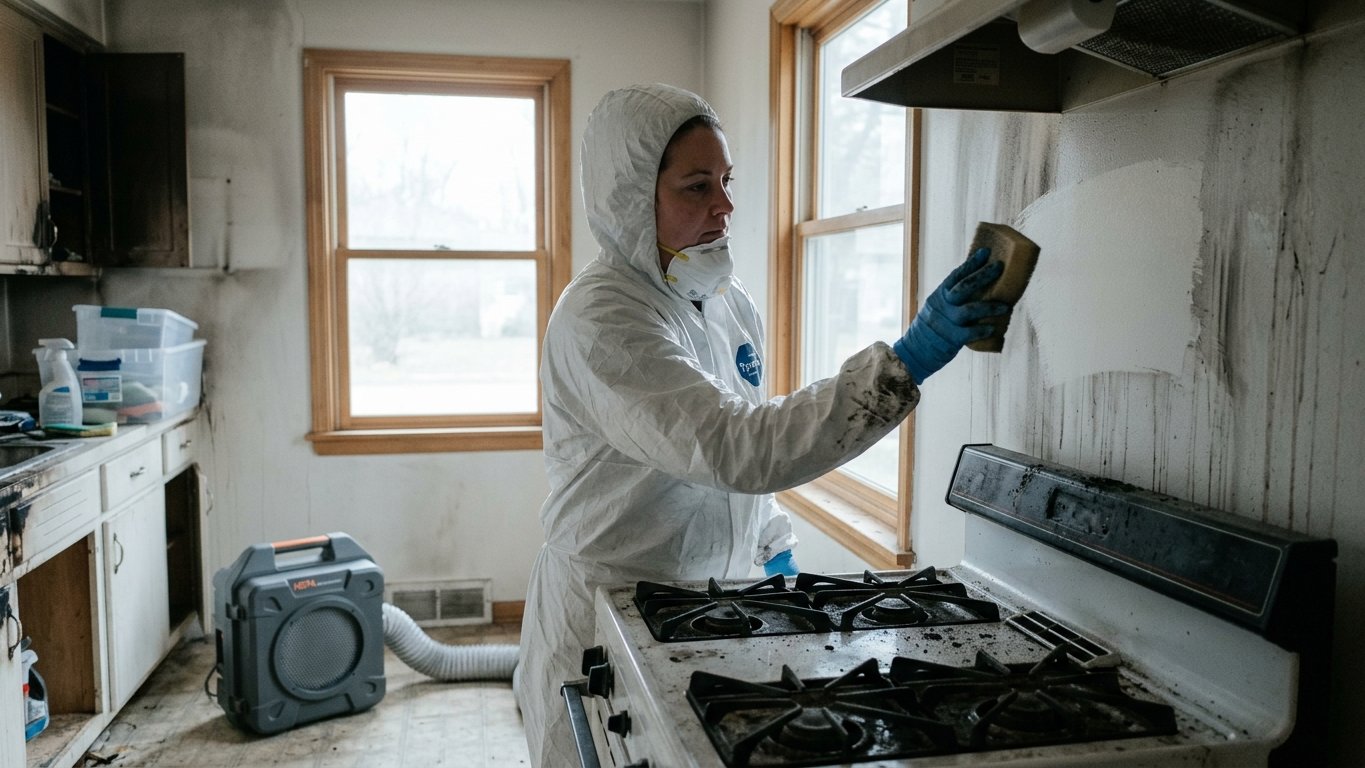
The direct answer: fire restoration is three jobs in one — cleaning the soot and smoke residue the fire left, neutralizing the odor that soaked into porous materials, and drying out the water the fire department used to save your home. We handle all three under one roof, which matters, because they race each other: soot etches finishes while wet drywall feeds mold.
Smoke is the part homeowners underestimate. A small kitchen fire can leave residue in rooms the flames never touched, because smoke travels with heat and settles as it cools — into carpet, upholstery, closets, and ductwork. Soot is also mildly acidic: every day it sits on metal, stone, and painted surfaces, it stains deeper. That's why we treat a "small fire" with the same urgency as our 24/7 water damage restoration in Ann Arbor — the clock is doing damage even after the flames are out.
We follow the standards-based approach the restoration industry works to — the IICRC's S700 fire and smoke standard, the counterpart to the S500 water standard our drying follows. As an IICRC Certified Firm (#70230473), that's not marketing language; it's the checklist our crews are trained against.
What we respond to
- Kitchen and cooking fires
- Electrical and appliance fires
- Smoke damage from a neighboring unit or house
- Furnace puff-backs coating rooms in soot
- Water damage from firefighting
- Lingering smoke odor after a small fire
Before we arrive
Don't wipe soot with household cleaners — on many surfaces that smears and sets it. Don't run the HVAC system; it pulls smoke residue through the ducts into clean rooms. If the fire department cut power or gas, leave them off until the utilities clear it. Ready.gov's home fire guidance covers the safety side of returning after a fire; we'll walk you through the property side on the phone.
The insurance side
Fire is a core covered peril on standard homeowners policies, and these claims tend to be substantial — which makes documentation everything. We photograph before anything is touched, inventory damaged contents, and itemize the scope in the format adjusters expect. Start with our guide to how home insurance claims actually work — the process is the same discipline, fire or water.
One honest boundary: we restore and clean — soot, smoke, odor, and the water damage. Structural rebuilding after a major fire is general contractor work, and we'll tell you plainly where our scope ends and point you in the right direction.
Our fire response
Fire, smoke, and water — in the right order
-
Secure & assess
Once the fire department releases the scene, we document everything, secure openings, and map fire, smoke, and water damage room by room.
-
Stop the secondary damage
Firefighting water gets extracted and drying starts immediately — soot is acidic, so exposed surfaces get protected before residue sets in.
-
Clean soot & residue
Different smoke leaves different residue. Dry soot, wet smoke, and protein residue each get the cleaning chemistry that lifts them without smearing.
-
Neutralize the odor
Source materials that can't be saved come out; what stays is cleaned and treated so smoke odor is neutralized at the source — not perfumed over.
Real questions, straight answers
Fire and smoke damage questions we hear most
Can you just paint over smoke damage?
Not directly — soot bleeds through ordinary paint, and trapped odor comes back with humidity. The working order is: clean the soot off the surface, neutralize the odor, then prime with a stain-blocking sealer before any paint goes on. Painting first locks the problem in and doubles the work later. It's the most common DIY fire-cleanup mistake we see.
Why is there water damage after a fire?
Because putting a fire out is a water event. Fire hoses can push hundreds of gallons into a structure in minutes, so a 'fire job' is usually a fire, smoke, AND water job — soaked drywall, wet insulation, saturated carpet. That's why a company that does both matters: one crew handles soot and smoke while the drying equipment runs.
Does homeowners insurance cover smoke damage?
Fire and smoke are core perils on standard homeowners policies, so smoke damage — including smoke from a nearby fire — is generally covered. Documentation still decides how smoothly the claim goes: photos before cleanup, an itemized scope, and clear cause notes. We document as we work and deal directly with your adjuster, the same way we do on water claims.
Is there a standard for professional fire and smoke restoration?
Yes — the IICRC publishes the S700 standard for professional fire and smoke damage restoration, the fire-side counterpart to its S500 water standard. It defines how smoke residues are assessed, cleaned, and verified rather than just wiped and hoped. As an IICRC Certified Firm, that standards-based approach is how our crews are trained to work.
How long does smoke smell last in a house?
Left untreated, months to years — smoke particles settle into carpet, fabrics, and HVAC ducts and re-release every time humidity rises. Treated properly, the source residues are removed and remaining odor is neutralized rather than masked, which is why professional treatment holds where air fresheners fail. The sooner soot is cleaned, the less it etches and the less odor sets.
Just had a fire?
The first 48 hours decide what soot etches permanently. Call now — we answer around the clock.