Category 3 Emergency Response
Sewage & Water Backup Cleanup in Ann Arbor, MI
A sewer backup isn't a mess — it's a biohazard in your home. Our crew removes the water and contaminated materials under containment, disinfects everything it touched, and verifies the space is safe again. 24/7.
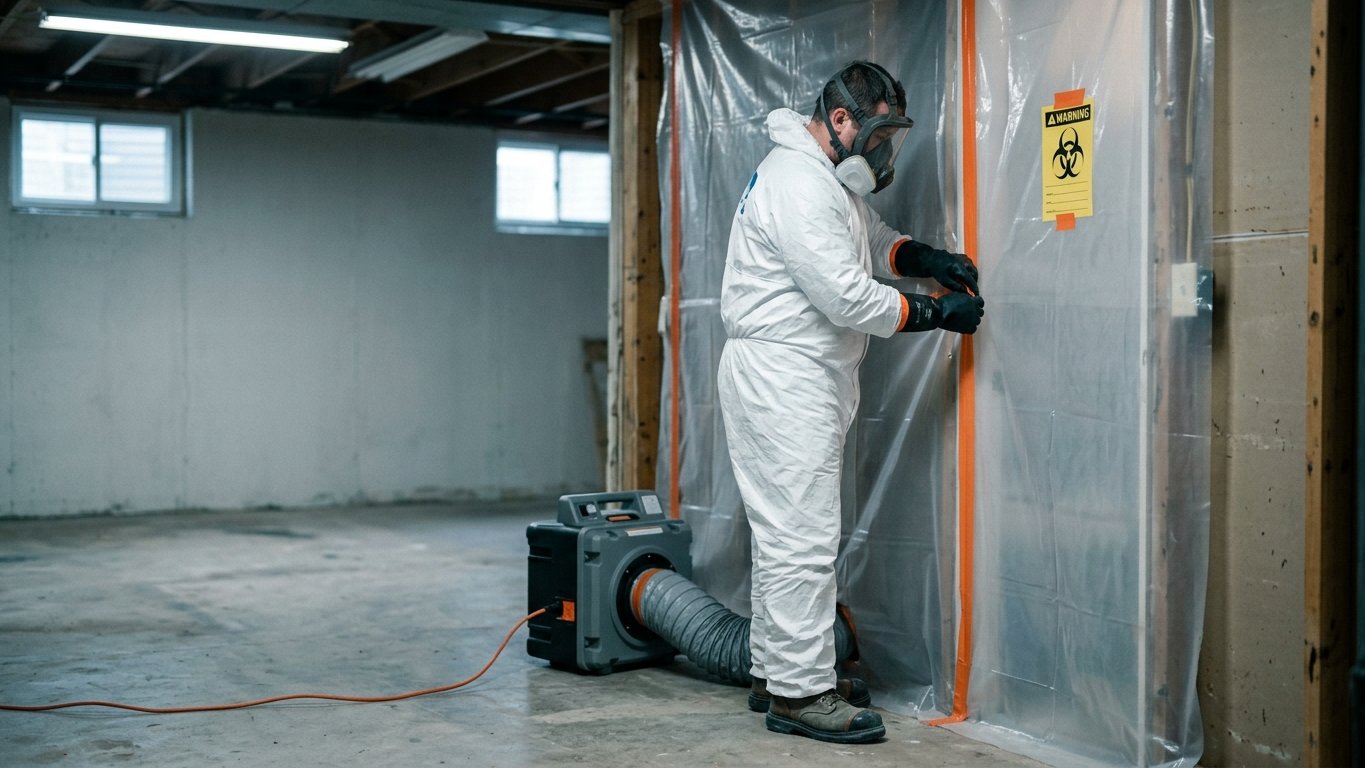
Sewage cleanup in Ann Arbor: this is not a mop job
The direct answer: water from a sewer backup is Category 3 — "black water" — and everything porous it touches is considered contaminated. Safe cleanup means protective equipment, containment, removal of soaked porous materials, disinfection of every hard surface, and verified drying. That's the standard we work to on every backup, every time.
Backups here rarely announce themselves. A hard rain surcharges the municipal line, an aging lateral finally roots shut, or an ejector pump quits — and the lowest drain in the house becomes the exit. In Ann Arbor's older neighborhoods, that lowest drain usually sits in a finished basement.
Sewage work is the most safety-sensitive branch of our Ann Arbor water damage restoration service, and the one we most strongly urge you not to DIY.
Backups we handle
- Sewer main backups into the home
- Basement floor drain overflows
- Toilet and drain line overflows
- Sump discharge and ejector failures
- Storm-surcharged municipal lines
- Gray-water appliance discharges
Why the protective gear isn't optional
Sewage-contaminated water can carry bacteria, viruses, and parasites — the CDC's floodwater safety guidance treats any contact with it as an exposure risk, which is why our techs work in gloves, boots, and respirators, and why we ask families (and pets) to stay clear of the area until disinfection is done. A shop vac and open windows don't just fall short — aerosolizing black water makes exposure worse.
What can be saved — honestly
Hard, non-porous surfaces — concrete, tile, sealed wood, metal — can almost always be disinfected and kept. Carpet, pad, upholstered furniture, and drywall that absorbed the backup can't be reliably decontaminated and are removed as standard practice. We'll walk you through the keep/discard call item by item, and it all goes in the claim documentation. Sewer backup coverage is its own endorsement on most policies — check what homeowners insurance covers for water damage before you assume.
Safe cleanup, in order
How professional sewage cleanup works
-
Contain the contamination
The affected area is isolated so Category 3 water — and everything it touched — stays put instead of tracking through the house.
-
Extract & remove
Black water is extracted with dedicated equipment; carpet pad, soaked drywall, and other porous materials in contact with it are bagged and removed.
-
Disinfect & deodorize
Every hard surface the backup touched is cleaned and treated with hospital-grade disinfectants, then deodorized at the source.
-
Dry & verify
The structure is dried to standard and moisture-verified, so what's left behind is clean, dry, and documented for your insurer.
Real questions, straight answers
Sewage backup questions we hear most
How do you clean up after a sewer backup?
Treat everything the water touched as contaminated. Professionals work in protective equipment: extract the black water, remove contaminated porous materials, disinfect every hard surface, then dry and verify the structure. Skip the shop-vac-and-open-windows approach — Category 3 water carries bacteria and viruses, and aerosolizing it makes exposure worse.
Can carpet be cleaned after a sewer backup?
Carpet and pad that absorbed sewage are removed and discarded, not cleaned — that's the standard practice for Category 3 water, and it's about safety, not cost. Contamination bonds to porous materials no shampooing can fully remove. Hard flooring underneath can usually be disinfected and saved. Your insurer expects the carpet line item; it's normal.
What type of water damage is not covered by insurance?
The usual exclusions: gradual leaks and seepage, damage from deferred maintenance, overland flooding without a flood policy, and sewer or sump backup without that endorsement. Insurers distinguish "sudden and accidental" from "you had time to fix it." That's why fast professional response and dated documentation matter — they establish the loss as sudden.
Can you live in a house with water damage?
It depends on the water category and the extent. A contained clean-water leak that's drying under equipment is usually livable, if noisy. Sewage-contaminated water, saturated ceilings, active mold growth, or shut-off utilities are reasons to stay elsewhere until cleanup and safety checks are done. A restoration inspection will tell you which situation you're in.
Sewage backing up right now?
Keep everyone away from the water and call. Category 3 losses get worse — and more expensive — with every hour of contact time.