Flood Cleanup
Truck-mounted extraction of standing water after storms, river flooding, or burst plumbing — then full structural drying.
See how our flood cleanup works24/7 emergency response — Ann Arbor & Washtenaw County
Licensed and Insured
Ann Arbor · Washtenaw County · Open 24/7
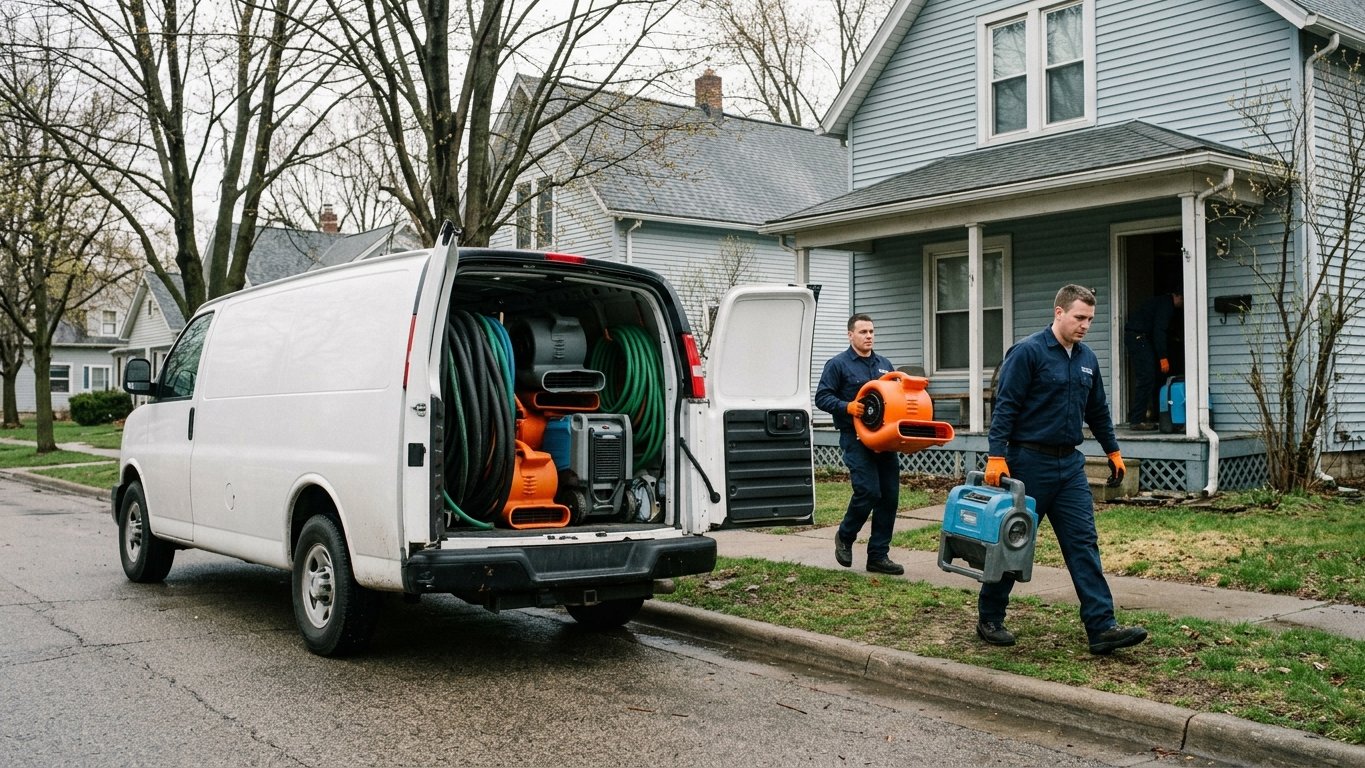
Flooded basements, burst pipes, and sewage backups don't keep normal business hours. Neither do we. Our crew arrives fast with extraction and drying equipment, and documents every step for your insurance claim.
Request Emergency Help
We answer 24/7 Fastest response: call (734) 346-7700
Google rated [GOOGLE RATING] · [#REVIEWS]
Licensed & Insured
Fast local response — 24/7
We work with your insurance
What we handle
Water is the core of what we do — and the same crew, equipment, and documentation discipline covers fire and smoke, stubborn odors, and the carpet a loss leaves behind. Pick the situation that looks like yours.
Truck-mounted extraction of standing water after storms, river flooding, or burst plumbing — then full structural drying.
See how our flood cleanup worksCategory 3 “black water” removal after sewer backups and overflows — protective handling, disinfection, and odor control.
What safe sewage cleanup involvesPump-outs after sump failures and seepage, wet carpet and drywall handled, moisture tracked to zero.
Get a flooded basement pumped outEmergency tarping and board-up, water intrusion stopped, and structural drying after Michigan wind and rain events.
Our storm damage response, step by stepContainment, HEPA-filtered removal, and moisture correction for mold that follows untreated water damage.
How professional mold remediation worksMetered drying of framing, subfloors, and walls — air movers, dehumidifiers, and daily readings until dry standard.
How metered structural drying worksSoot and smoke-residue cleanup, odor neutralizing, and drying out the water firefighting leaves behind.
What fire and smoke restoration involvesFinding and removing the source of smoke, sewage, pet, and musty odors — then treating what soaked in.
How professional odor removal worksTruck-mounted hot-water extraction for high-traffic lanes, pet accidents, and post-restoration refresh.
See our carpet cleaning processPatching burns and pet damage, re-stretching ripples, and re-laying carpet after water losses.
What carpet repair can saveOur crews cover all of Washtenaw County — Ypsilanti, Saline, Dexter, Chelsea, and Pittsfield Township.
Check your service areaWhen the water is rising
When a storm cell stalls over Washtenaw County, Ann Arbor's low-lying blocks along the Allen Creek floodway — one of the city's officially mapped floodplains — feel it first. Streets pond, storm drains surcharge, and water finds its way into homes that stayed dry for decades.
The difference between a bad night and a gutted first floor is how fast extraction starts. Our emergency flood cleanup in Ann Arbor pulls standing water with truck-mounted equipment, then dries the structure to metered dry standard — so walls and floors that can be saved, are.
Basements are our home turf
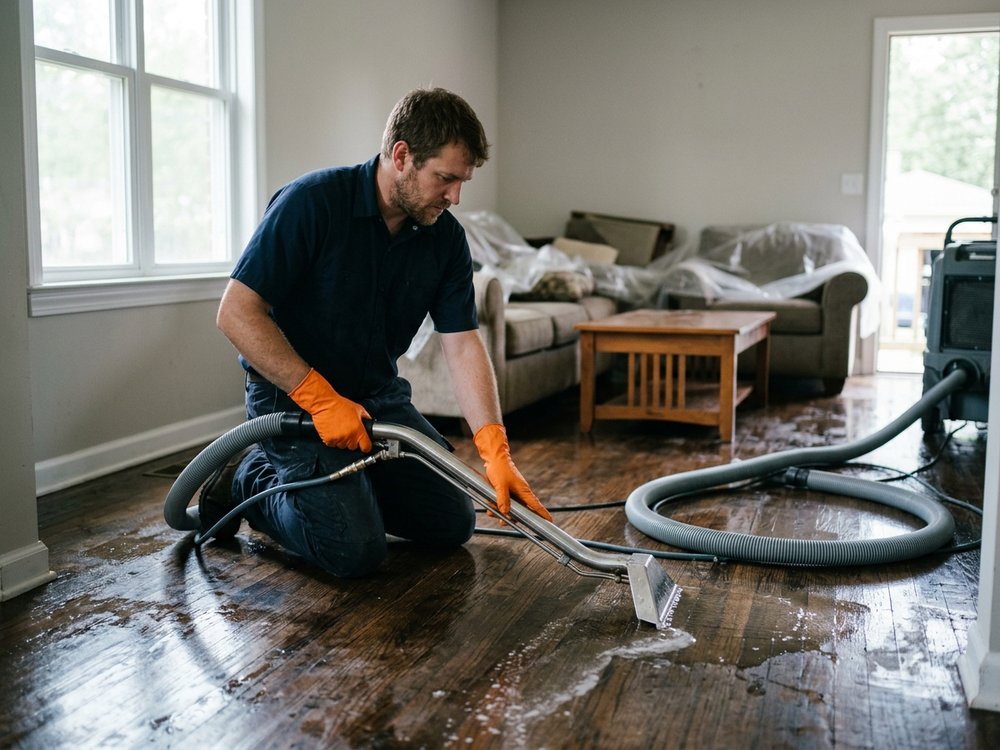
Ann Arbor basements flood two different ways: century-old stone foundations near downtown seep in every long rain, and newer subdivisions flood fast when a sump pump quits during a spring storm. Both end the same — soaked carpet, wicking drywall, and a 48-hour countdown to mold.
Our flooded basement pump-outs and drying handle the whole sequence: water out, wet materials triaged honestly (what dries vs. what goes), and moisture tracked daily until the readings say done.
What happens when you call
No mystery, no runaround — the same four steps on every loss, every time.
A real person answers, day or night. We triage what's wet, how deep, and whether utilities are safe — and give you first steps before the truck arrives.
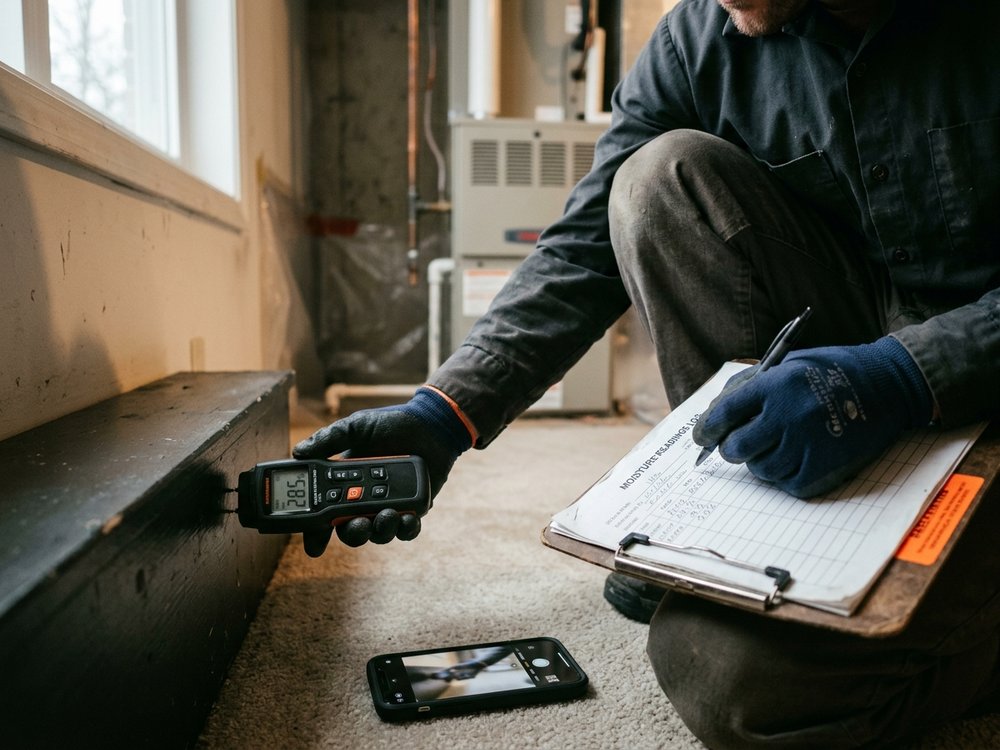
On site, we meter walls and floors — not just what's visible — classify the water, and photograph everything so your insurance file starts correctly.
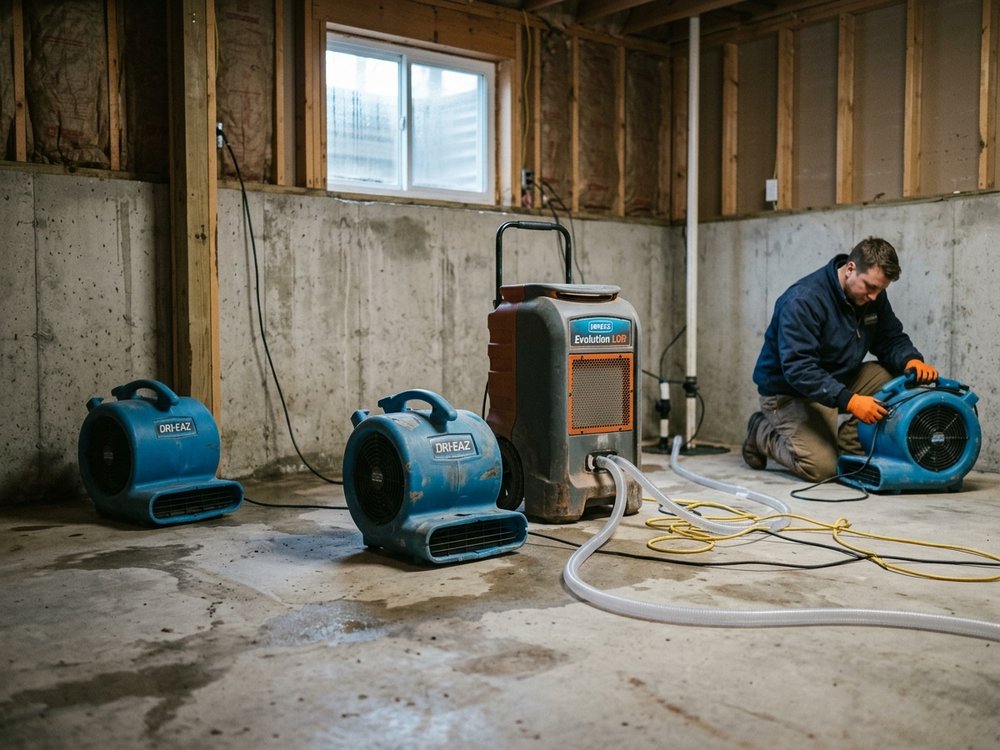
Truck-mounted extraction pulls the standing water; air movers and dehumidifiers take the structure down to dry standard, with readings checked daily.
You get final dry readings and a line-item scope in the format insurers expect. Then repairs bring the space back to pre-loss condition.
Every hour it sits, the damage spreads. Our Ann Arbor crew is awake — get drying started tonight.
Local, not a franchise call center
We're based on S 7th St. on Ann Arbor's west side — minutes from downtown, the Old West Side, and the neighborhoods we dry out most often. When you call, you're not routed through a national queue; you're talking to the crew that will stand in your basement.
Before we touch anything, you'll know who we are: see the licenses, insurance, and guarantees we carry — and what our arrival paperwork looks like.
Worried about the bill? Start with what water damage restoration costs and whether homeowners insurance covers your water damage — both written for Ann Arbor homeowners, not adjusters.
Straight answers
Pulled from what Ann Arbor homeowners actually search — answered the way we'd say it on the phone.
Stop the water if you safely can — close the main shutoff for plumbing leaks — and keep people and pets away from the wet area. If water is near outlets or the panel, leave the electricity to professionals. Then call a 24/7 restoration line, move what valuables you can, and photograph everything before cleanup starts. Fast documentation makes your insurance claim much smoother.
Mold can begin growing on damp materials within about 24 to 48 hours — which is why drying can't wait for business hours. The first day is spent by spores settling into wet drywall, carpet pad, and framing; visible growth often follows within days. Starting extraction and dehumidification inside that window is the single best mold-prevention step there is.
Generally yes for sudden, accidental water damage — a burst pipe, a failed appliance line, wind-driven rain through storm damage. Generally no for gradual damage: slow leaks, seepage, or maintenance that was deferred. Overland flooding is excluded from standard policies entirely and needs separate flood insurance. The cause of the water decides the coverage, so document how it happened.
With professional equipment, roughly three to five days is typical — longer for saturated concrete, dense materials, or high humidity, and much longer with household fans alone. The honest answer comes from moisture meters, not the calendar: a basement is dry when readings hit dry standard, and quitting early is how hidden mold problems start.
Small clean-water spills caught immediately — yes, towels and a fan are fine. Anything that's been wet more than a day, touched drywall or flooring layers, or involves contaminated water is a different job: it needs metered drying and often protective handling. The risk of DIY isn't effort, it's the moisture you can't see, which quietly becomes mold behind walls.
Start with the right page