
Emergency Flood Response
Flood Cleanup in Ann Arbor, MI
Standing water in your home? Our Ann Arbor crew pumps it out, extracts what soaked in, and dries the structure to metered dry standard — 24/7, with every step documented for your insurance claim.
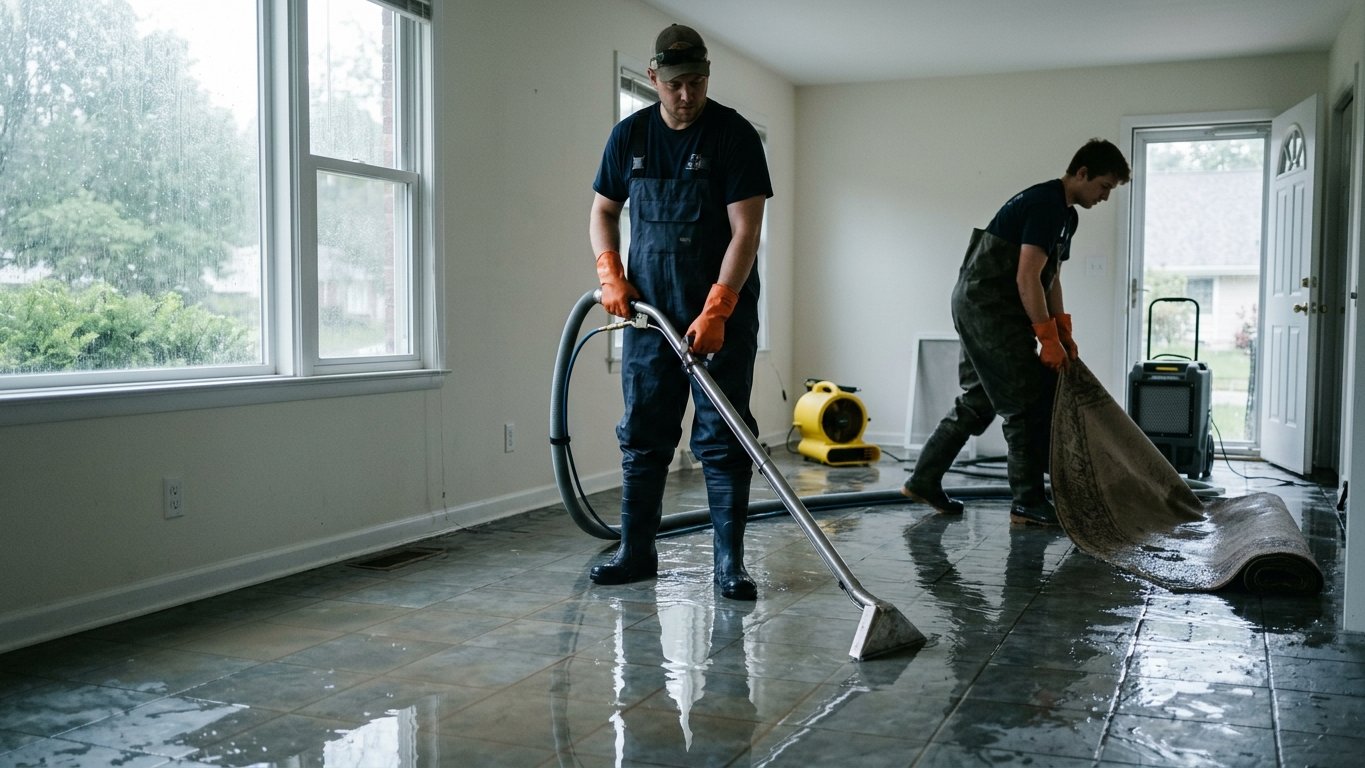
Flood cleanup in Ann Arbor, done in the right order
The direct answer: flood cleanup means removing standing water, extracting what's soaked into floors and walls, and drying the structure with commercial equipment before mold gets its 48-hour head start. It is time-critical work — which is why we answer the phone around the clock and roll equipment the same hour you call.
Ann Arbor floods in predictable places. When a storm stalls over Washtenaw County, the blocks along the Allen Creek floodway pond first, storm drains surcharge, and homes near the Huron River watch the water table climb into their basements. We work these neighborhoods from our shop on S 7th St., so the truck isn't coming from across the county.
Flood cleanup is one branch of our 24/7 water damage restoration in Ann Arbor — if you're not sure your situation counts as a "flood," call anyway. Wet is wet; we'll sort the label out later.
What we respond to
- Storm and heavy-rain flooding
- Huron River and creek rise
- Burst supply lines and frozen pipes
- Water heater and appliance failures
- Overland water through window wells
- Overwhelmed sump pumps
While the truck is on the way
Keep people and pets out of the water, especially if outlets or the electrical panel are anywhere near it. Don't run a household vacuum on standing water. If you can reach the main shutoff safely and the source is plumbing, close it. The EPA's flooded homes cleanup guidance covers the safety basics; we'll walk you through the rest on the phone.
Insurance: floods are a special case
Water from a burst pipe and water from an overflowing creek are treated completely differently by insurers — one is usually a homeowners claim, the other needs separate flood coverage. Our documentation separates cause, category, and scope so the claim starts on the right foot. Start with how insurance handles water damage claims if you're unsure where your loss lands.
Our flood response
Four steps, no improvising
-
Stop the source, cut the risk
Supply valve closed, utilities checked. If the water came from outside, we confirm it has crested before full extraction begins.
-
Pump & extract
Truck-mounted extraction removes standing water fast — including what's soaked into carpet and pad.
-
Strip what can't be saved
Soaked pad, wicked drywall bottom, wet insulation: we remove only what the meters and the water category say must go.
-
Dry to the numbers
Air movers and dehumidifiers run until daily moisture readings hit dry standard — then you see the final log.
Real questions, straight answers
Flood cleanup questions we hear most
What should I do immediately after water damage?
Stop the water if you safely can — close the main shutoff for plumbing leaks — and keep people and pets away from the wet area. If water is near outlets or the panel, leave the electricity to professionals. Then call a 24/7 restoration line, move what valuables you can, and photograph everything before cleanup starts. Fast documentation makes your insurance claim much smoother.
What does the water damage restoration process involve?
Five stages: inspection and moisture mapping, water extraction, structural drying with air movers and dehumidifiers, cleaning and sanitizing, then repairs. A crew meters moisture in walls and floors — not just what's visible — and monitors daily until readings return to dry standard. The drying phase is what separates professional restoration from fans-and-hope.
How long does it take for a flooded basement to dry out?
With professional equipment, roughly three to five days is typical — longer for saturated concrete, dense materials, or high humidity, and much longer with household fans alone. The honest answer comes from moisture meters, not the calendar: a basement is dry when readings hit dry standard, and quitting early is how hidden mold problems start.
What kills mold after a flood?
Moisture control kills mold problems; products alone don't. After a flood the sequence is: remove standing water, discard soaked porous materials like carpet pad and wet drywall, clean hard surfaces, and dry the structure to normal moisture levels. Sprays applied over a still-damp room only delay the regrowth. Drying is the treatment.
Does FEMA help with flood cleanup?
Only when the flood is part of a federally declared disaster. In that case, FEMA assistance can help uninsured households with essential cleanup and safety needs — it supplements, not replaces, insurance. For ordinary local flooding in Washtenaw County, your coverage (homeowners, water backup endorsement, or NFIP flood policy) is the funding path.
Standing water right now?
Every hour it sits, more of your home soaks it up. Call — a crew and a pump can be moving within the hour.