
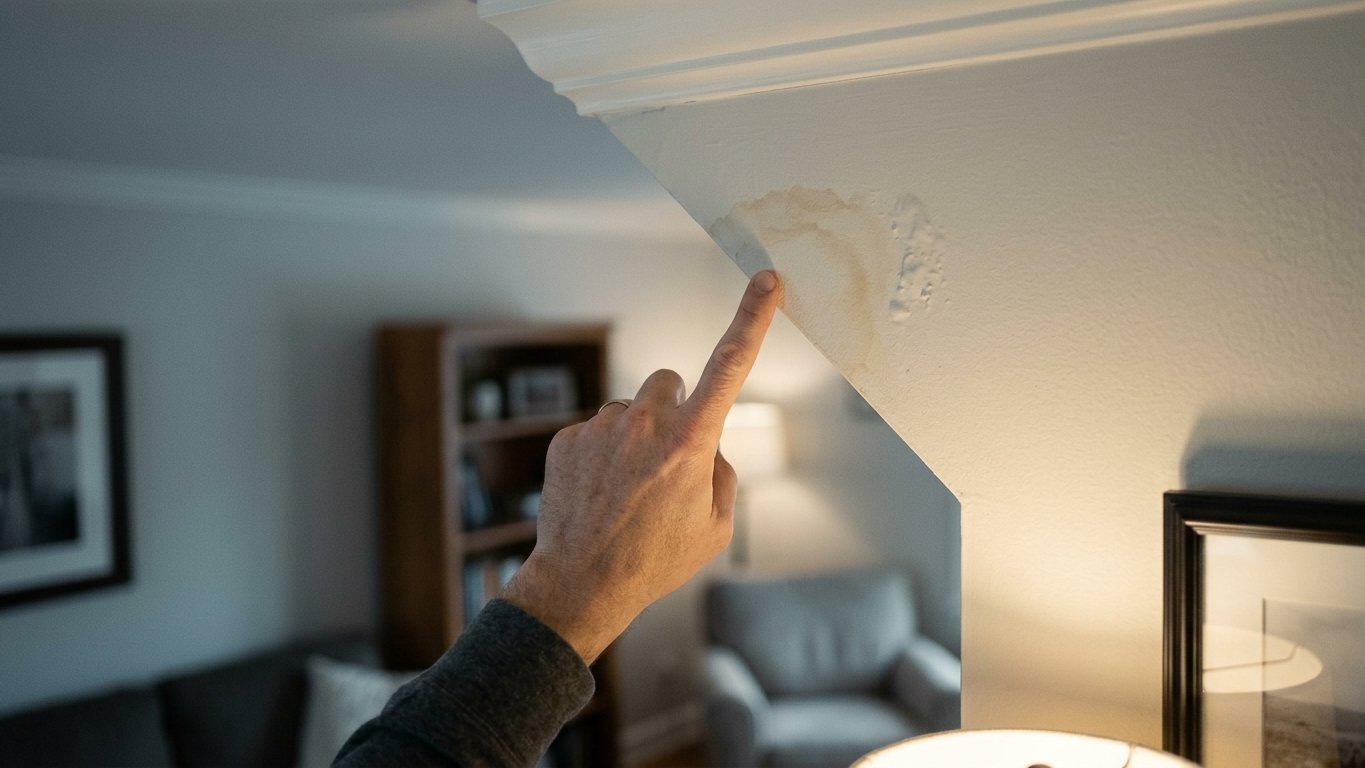
The expensive water damage is rarely the dramatic kind. It's the slow leak that worked inside a wall for a season. Here are the nine signs we tell Ann Arbor homeowners never to ignore.
1. A musty smell that cleaning doesn't fix
That smell is biology, not dust — damp material feeding microbial growth somewhere air reaches but eyes don't. The EPA's mold guidance makes the underlying rule simple: where there's persistent mold or mustiness, there's a moisture problem to find and fix first.
2. Stains that come back after painting
A ceiling or wall stain that reappears through fresh paint is telling you the source is still active. Paint is a bandage; the leak is the wound.
3. Paint or wallpaper that bubbles and peels
Moisture migrating through drywall breaks the bond from behind. Watch especially below bathrooms and around window frames.
4. Floors that cup, crown, or creak new
Hardwood boards cupping at the edges, laminate swelling at the seams, or a floor that developed new soft spots — all classic signs of moisture moving underneath.
5. Walls or trim that feel soft
Drywall should never give under thumb pressure. Softness low on a wall often means water wicking up from a slab or leaking plate — a meter will say in seconds.
6. A water bill that drifted up
A supply-side leak runs 24/7. If usage climbed without a lifestyle change, try the meter test: no water running, watch whether the meter still moves.
7. The sound of water with nothing on
Hissing or trickling in a quiet house is worth taking seriously — especially inside walls shared with bathrooms or below kitchens.
8. Condensation patterns and window sweat
Chronic condensation means chronic humidity — and chronic humidity means somewhere in the house is feeding moisture into the air faster than it leaves.
9. Allergy symptoms that stay home
Congestion and irritation that improve when you leave the house and return when you do are a pattern worth connecting to the building, not just the season. Mention it to your doctor — and get the moisture source inspected.
What to do with a suspicion
Don't open the wall on a hunch. A moisture inspection with meters and infrared finds the water path without exploratory demolition — and if something's found, you'll want it documented properly for insurance from the first photo anyway.
This guide supports our service page: Water damage restoration in Ann Arbor — where the professional version of this work is explained end to end.